Showing newest posts with label artist Picasso. Show older posts

May 23, 2010

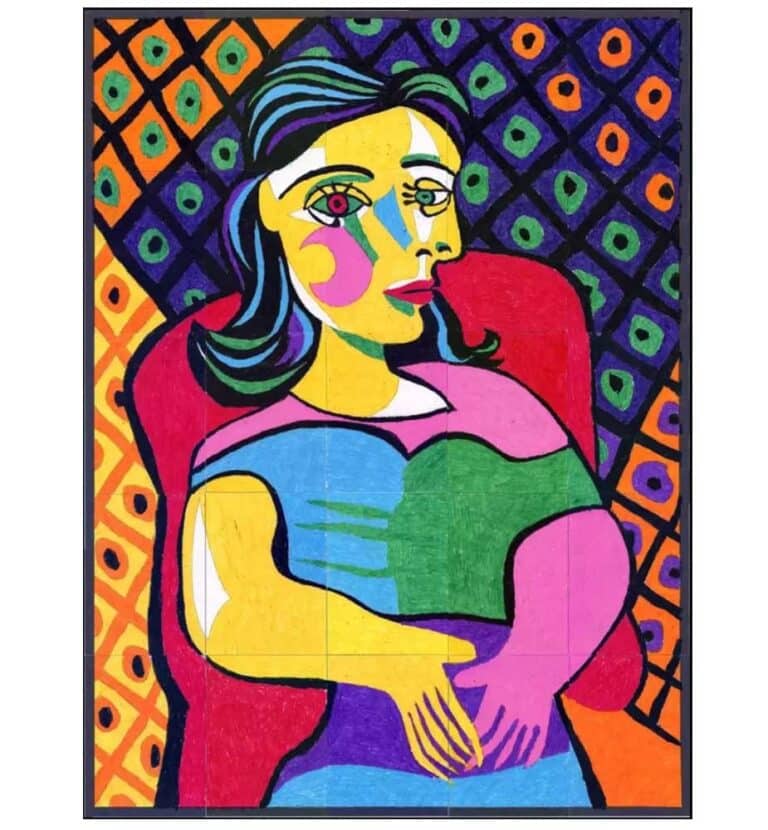
How to Draw a Cubist Portrait

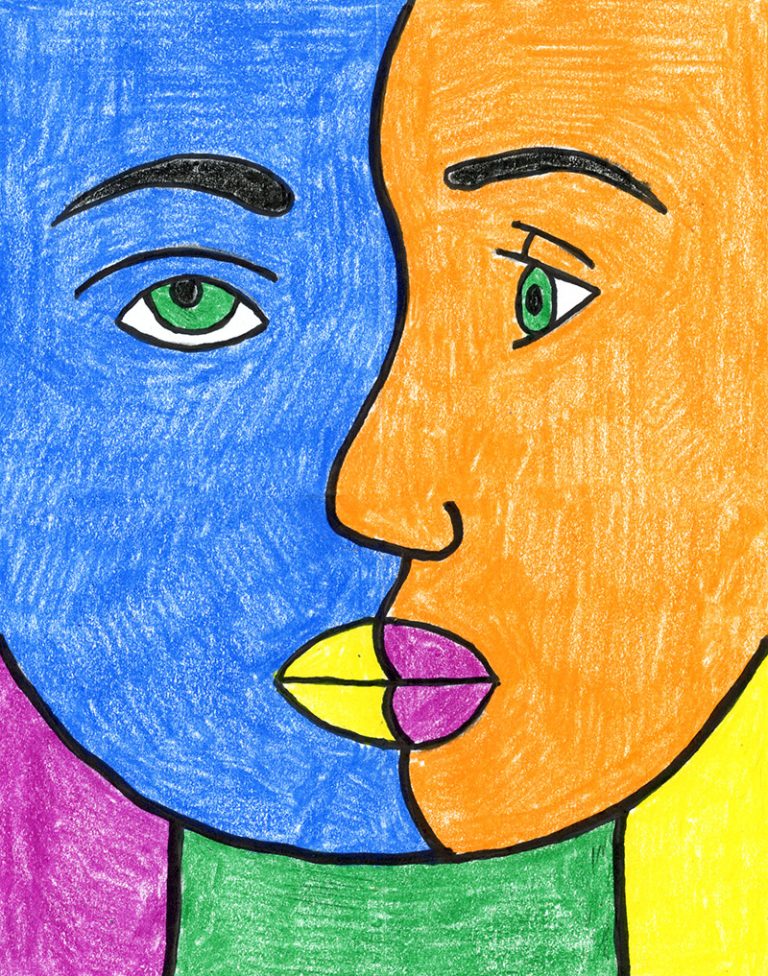
Many 3rd graders in California learn that Picasso’s cubism was about seeing two sides of something at the same time. Here is a breakdown of steps that I use, which I hope are helpful.
1. Give each student a 9" x 12" piece of black construction paper. Have them fold the paper in half vertically so they have a middle line. Then they are to make a light pencil mark in the middle, and then in the middle of each of those sections as in Diagram 1.
2. A profile line is drawn down the middle, with the top of the nose hitting the top quarter mark, the bottom of the nose hitting the middle mark, and the bottom of the chin hitting the bottom quarter mark. The chin ends as a curve up and the neck line is added as in Diagram 2.
3. Profile features are added as shown in Diagram 3.
4. The face is completed with frontal view features. The chin and neck lines are added to symetrically match the right side as in Diagram 4.
5. After the pencil drawing is complete, the lines are traced with a black oil pastel, making the lines very fat. All the shapes are then filled in. Encourage the use of unusual colors.

Feb 25, 2010

Picasso Pastel Portraits

Pablo Picasso was one of the most prolific artists ever, and one of his contributions was cubism, the idea of looking at something from different angles. A good way to demonstrate this idea is to draw a portrait with both a front and profile view.
1. With a 9" x 12" piece of black construction paper, show the students how to draw a profile down the middle of the paper. Start at the top center, draw a forehead straight down a couple of inches, then comes a nose that ends in the center of the paper, lips below, and chin that curves up and goes off the paper. Finally, add a neck to the bottom.
2. Complete the profile face with a profile eye, and chin line that matches the opposite side.
3. Complete the front view face with an eye that looks directly out, along with a mouth and chin.
4. Add hair and any other desired detail.
5. Trace the drawing with a black oil pastel. Press hard to make a dark line.
6. Fill in all of the drawing with oil pastels, leaving no paper to show. Encourage unusual colors, as many abstract artists do.

Jan 29, 2010

Picasso Tinted and Shaded Self-Portrait

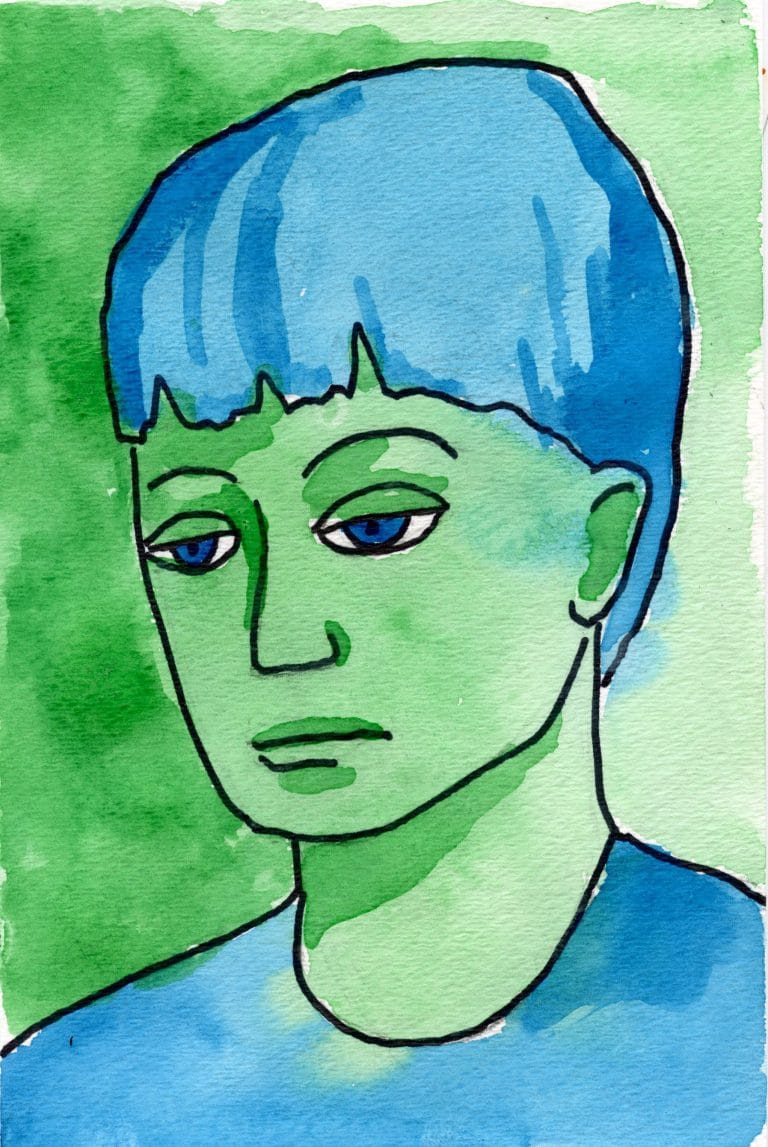
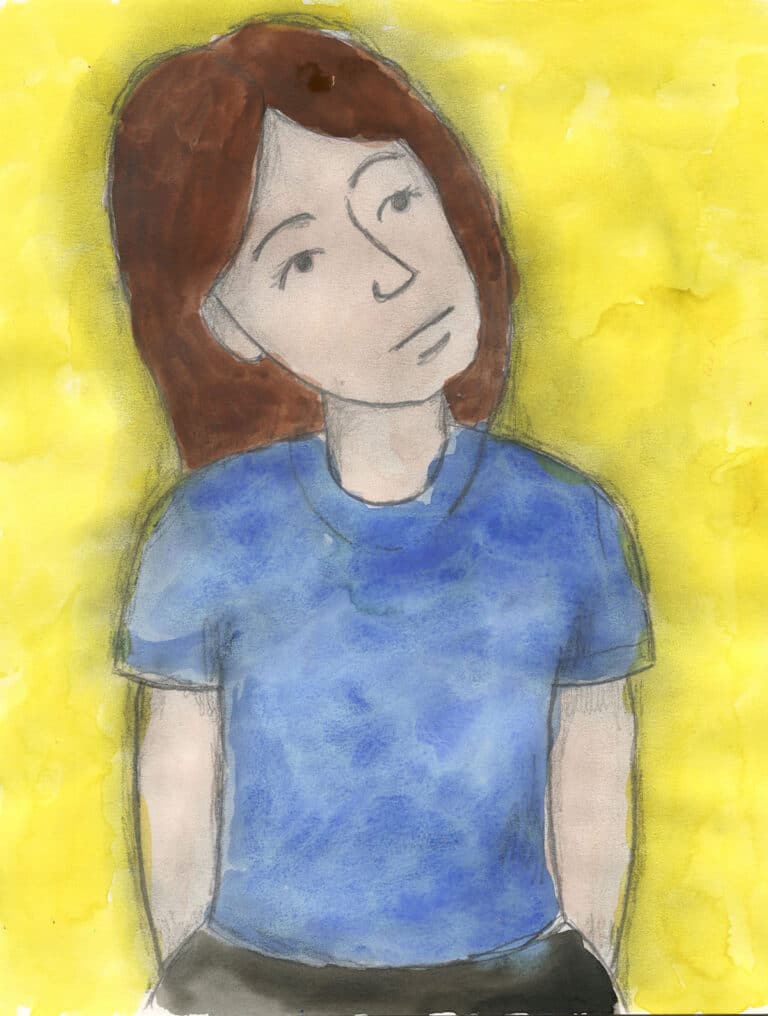
Pablo Picasso's Blue Period, in which he painted only blue paintings of sad subject matter, is a good example of how an artist used color to reflect his feelings. Ask children to think of the different feelings associated with colors before they choose the main color for their self-portrait.
1. Show the students how to draw a simple self-portrait with pencil on a heavy piece of paper. It's a good time to review the basic proportions of the face (eyes in middle of oval, nose halfway down, etc.) Have them trace the pencil lines with a black Sharpie marker.
2. Let the students choose one main color - red, blue, green or yellow are good – and distribute on a paper plate with a little black and white. (Acrylic and tempera paints will work for this.) Show the students how they can mix many variations of the main color by adding a little of each color together on the plates.
3. Ask the students to fill in each area of their drawing with a different color of paint. If the paint is thinned well with water, they can paint over some of the black lines if they want.
4. After the entire face and background is painted, let dry. When complete, any black lines that were painted over may be traced again to make them stand out.
This very cool painting was made today by a kindergartener in my afterschool class.

Jun 17, 2009

Tinted Self-Portrait

Pablo Picasso's Blue Period, in which he painted only blue paintings of sad subject matter, is a good example of how an artist used color to reflect his feelings. Ask children to think of the different feelings associated with colors before they choose the main color for their self-portrait.
1. Show the students how to draw a simple self-portrait in pencil on a heavy piece of paper. It's a good time to review the basic proportions of the face (eyes in middle of oval, nose halfway down, etc.) Have them trace the pencil lines with a black Sharpie marker.
2. The students choose one main paint color – red, blue, green or yellow are good – and distribute on a paper plate with a little black and white added to the side. (Acrylic and tempera paints will work for this.) Show the students how they can mix many variations of the main color by adding a little of white or black on the plate. The students are to fill in each area of their drawing with a different color of paint.
3. After the entire face and background is painted, let dry. When complete, any black lines that were painted over may be traced again to make them stand out.

  © Blogger templates The Professional Template by Ourblogtemplates.com 2008

Back to TOP