May 20, 2013

Ancient Maps

I’ve found another use for my supply of dry wax paper, which is my staple for canvas portrait art. The paper is perfect for tracing, painting and crumbling, as in making “old” maps.
1. A class was studying ancient Greece, so I googled for a line drawing of a map and found THIS. I printed it to scale on a letter size paper, taped a sheet of my Dry Wax Paper on top, and had kids trace the image with a very fine point black Sharpie marker.
2. Students used watercolor paint to fill in the land and sea. The paper did resist the paint a bit (the wax was doing it’s thing) but when rubbed with a paper towel the color soaked in.
3. When the paint was dry, students crumbled it up and then smoothed it out. The paper is fairly tough, and does not tear too easily. I’m kinda wondering what a coffee stain might do to enhance the aged look. Hmmm.

May 19, 2013

Love Elephants Art Contest Winner!

I want to give a shout out to one of my students – Ethan – who won 1st place in the 2013 Love Elephants Art Contest this afternoon. It was organized for Los Angeles students K-6 by Adopt the Arts Foundation, the International Fund for Animal Welfare, and the Los Angeles Unified School District. The opening was a top notch affair, with celebrities, entertainment, treats, and children’s art that was all beautifully and professionally displayed. I can only imagine the hours of work that went into having such an event, so I want to thank all who helped make it happen, and support the arts in our school district. You are the best!!

May 18, 2013

Tap Tap Coloring Page – FREE Download

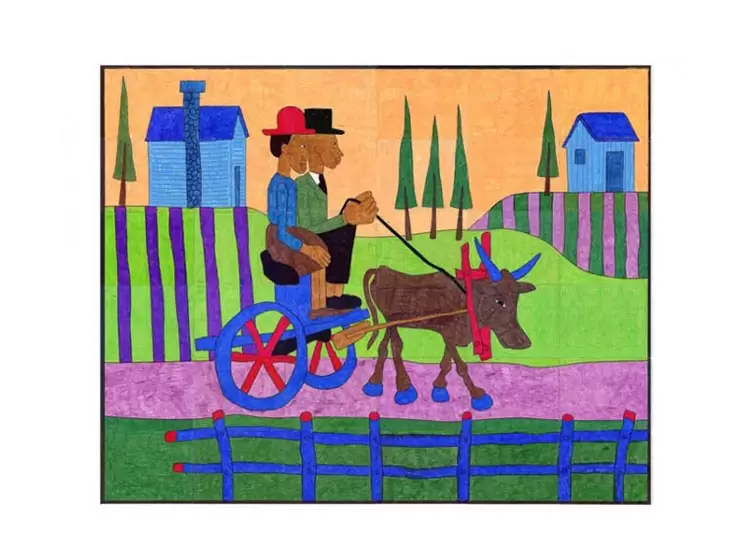
The very resourceful Haitians have a long history of traveling by Tap Taps, which are some of the most colorful vehicles you will ever see. Click HERE to download my original coloring page for FREE. Here’s a fun fact about their name – when a traveler wants to get off at a stop, they reach out and “tap, tap” the side to let the driver know to slow down. How efficient is that?

May 17, 2013

Paul Klee Drawing

One way to appreciate the masters is to try to copy them. A famous painting of Paul Klee’s titled “The Grooms Arrival” looks like one simple doodle drawing filled with different colors, which I thought my students would enjoy imitating.
1. I showed students how to draw a continuous line that roughly resembled a person’s body. When the it was done, they could add arms and feet that also crossed over the body in some fashion. A hat, eyes and mouth were added.
2. The pencil lines were traced with a fat black marker. Staples sells chisel-tip permanent markers that are great for this purpose.
3. All of the closed shapes were colored in with colored pencils. My students used my Dick Blick pencils, which work well on colored paper. Construction crayons would work well too.

May 16, 2013

Model Magic Cupcakes

 Some days just end up being rewarding, and this was one of those. I had only hoped for lots of decorative sprinkles on student’s cupcakes, but they did so much more than that that, as you can see.
1. Every student got a silicone cupcake holder, and filled it with a little bowl of Model Magic play dough.
2. Students chose from some very yummy looking play dough colors to make their cupcake tops using White or Pink. They formed a bowl and placed it on the cupcake bottom.
3. Extra colors were used to form decorations: Red, Yellow, Blue, Purple and more. To make green stems on the cherries, Yellow and Blue had to be mixed together. I think I have some future pastry chefs in my class.

May 15, 2013

Ancient Greek Urn

I actually ran out of drawing paper recently and tried out this food wrap (dry wax paper) that was left over from an old project. It makes for a very “breezy” painting that looks very delicate.
1. Students fold their 12" x 12" food wrap paper in half and crease. With a pencil, they could draw half of a large vase, preferably using up as much of the paper as possible. When complete, they traced it with a large, chisel-tip black Sharpie. With the paper still folded, they turned it over to see the lines showing through and traced again. When complete, the opened vase drawing should be symmetrical.
2. Students filled in their vases with decorations of the country, with either figures or plants. I asked them to draw lots of images, trace them carefully with the black Sharpie. Once completed, the negative space around them could be filled in black.
3. When the vase was all colored in, gold tempera paint was spread over the entire vase, but not the background. I had thirty 5th graders do this in 45 minutes, all with really bold and shimmery finishes.

May 14, 2013

Dino Plaster Casts

This was a big hit, and I think I worked out a system where 20 to 30 casts could be poured in about 50 minutes without any tears ... especially mine.
1. Give each student a square of heavy cardboard (about 6" ), a ball of clay (about 4" diam.) and a toy dinosaur. They will also need a ring that is made from cutting an 11" x 3" strip from posterboard or similar, overlapping the ends and stapling it together.
2. Each student needs to soften the clay, make a ball, and then press it on their desk to make a thick pancake. They keep turning and pressing it until it is wider that the posterboard ring.
3. The students use the toy to make a deep impression in the clay and then place the clay on the square cardboard. The ring is centered over the clay and pressed all the way down. At this point the students are allowed to peel off and play with the extra outside clay while they wait for their plaster pouring.
4. I set myself up a mixing station by the sink, and mixed batches of plaster in a large plastic container. You need something that holds about 6 cups of plaster. Add water and stir, stir, stir, until it looks like pudding. Pour plaster into each students mold until you think about a generous 1" think layer is formed. Have extra containers to switch to as the plaster will start setting.
5. The plaster needs to dry at least an hour or so. The outer paper ring is then torn off and the clay removed to reveal the plaster cast. After it is really dry, paint with very watery brown paint to make it look like a real rock.

May 13, 2013

Cartoon Fish

My Cartoon Class kids enjoyed drawing this fish today. There's something about big, overlapping eyes that make almost anything look funny.
1. Start by drawing the eyes, then the top of the mouth below it. Draw the bottom mouth that turns into the belly and then the center tail. Continue to the top back that ends above the left eye. Add fins, scales and lines.
2. Trace all the art with a black marker.
3. Color in the art with a crayon. The neater the students work, the better their art will look.
Thanks to Sophia H., a third grader, who drew this funny fish today.

May 12, 2013

Faith Ringgold Flag Collage

Faith Ringgold, an African-American artist, is best known for her large story quilts. In 1985 she made a piece titled “Flag Story Quilt” which inspired this collage.
1. To help cut swatches, I gave the students  this template to follow, printed on 8.5" x 11" cardstock. I passed out several old magazines to have them cut out swatches of red, and black and white type to fill in the stripes and blue swatches to fill in the rectangle. The pieces were attached with glue stick.
2. Students covered the blue rectangle with glue stick and arranged the hole punch circles for stars, as shown.

May 11, 2013

Folk Art Flag

 Given that folk art is created by untrained artists, everyday items are often used for its creation. I’ve had this wooden flag idea for awhile, and finally got to try it out.
1. I glued two sticks together with white glue to make a “flagpole”. I did this about 20 minutes prior to class so they could set up.
2. Students used liquid watercolor to paint 4 sticks red. They used a papertowel to dab them dry.
3. Two sticks were placed on paper, and I gave a squirt of white glue on each as shown.
4. Students started with red, and alternated 4 red sticks and 3 “white” across on the glue. Some stick overhung on both sides.
5. White punched paper stars were glued on navy blue rectangles of paper, 1.25" x 2". A glue stick works best because any extra dries clear.
6. The “flagpole” is glued on the bottom left stick with white glue. All is left to dry for about 20 minutes.
7. Before students left, I used a good adult scissors to trim off the extra stick on the right. I liked the homemade look to them – just in time for July 4th celebrations.